Showing posts with label Bible. Show all posts

Saturday, June 29, 2019

WHY CHOOSE THE ANGLICAN WAY?


 WHY CHOOSE THE ANGLICAN WAY?
When you search for “churches” you find a bewildering assortment of names and types of churches and denominations.  As you drive through the streets of a town or city you see an astounding variety of names outside buildings which are churches or temples or mosques.  It is as though there is in America a supermarket of religion where each of the churches and denominations is on display and we have the daunting task of choosing one or the other as we survey the packed shelves searching for our Sunday consumption.
In this fascinating but confusing supermarket of religion you will find the general category of “Anglican” and within this category you will “traditional” and “modern.”  “Anglican” does not take the same amount of space on the shelves as do the names “Roman Catholic” and “Methodist” and “Southern Baptist” but it is easily identifiable there.

Why choose the Anglican Way (traditional) from among this bewildering display?  Consider these reasons:

1. The Anglican Way has been around a long time.  When it comes to such things as smart phones or vehicles we rightly buy the latest tested technology.  However, when it comes to matters of the human spirit and soul and of man’s relation to God, looking to the accumulated wisdom of the centuries becomes vitally important.  In religion what has been believed, taught and confessed for centuries and what has been prayed and performed for more than a millennium is more likely to be our guide in making a sound choice than what has been produced in the last few years.  This is not just an arbitrary criterion but one based on the belief that what has been believed, taught, and confessed has been informed, guided and directed by the Holy Spirit to the glory of God the Father and our Lord Jesus Christ.   

Of course, having been on the scene a long time a traditional faith may look tired and may seem to be merely part of the way things are.  However, this is not necessarily so and the Anglican Way as an historical religion can be as vibrant today as it was two, three, or four centuries ago.  In fact a clear definition of the Anglican Way was formulated in the sixteenth century as part of the reformation of the Church in England.  The intention was to keep it the ancient and biblical Church it had always claimed to be, thus confounding the popular notion that it was founded by Henry VIII.  What actually occurred was that reform took place in his reign and that of his successors.

2. The Anglican Way is not a system of ideas but it is a living Faith.  Therefore we do not refer to it as “Anglicanism” or “Episcopalianism” for such terms suggest an ideology where people are committed to certain ideas or principles or beliefs thus making it a religion only of the head, a cerebral faith.  One of the first descriptions of Christianity was “the Way” (Acts ix.2) and our Lord Jesus Christ referred to himself as “the Way, the Truth and the Life” (John xiv.6).  He is the Way to Almighty God, our Father, because he is the Truth and the Life.  So the center of the Anglican Way is union with the Lord Jesus Christ, who is the one and only Way.  Thus this religion is a total way of life for every day or every year for the whole person, the whole family and the whole congregation.  It is a walking with the Lord Jesus Christ in the Holy Spirit through the world to the heavenly Father in glory.

3. The Anglican Way is both personal and corporate.  Each baptized person is encouraged to know the joy of a personal relation to the Lord Jesus Christ and to experience the witness of the Holy Spirit in his heart assuring him that he is a child of God our heavenly Father.  Yet he is also taught to see himself as a member of the body of Christ, bound in the Holy Spirit to other members of the body.  Part of limb separate from the body has no proper use; likewise to be fully Christian the individual believer is called Christ into a dynamic relation with fellow members of the body of Christ.  This calling to be together and belong together occurs in public worship but it also takes place in a variety of forms of fellowship and service together in parish life.  The belonging together in Christ Jesus is especially proclaimed by the rite of infant baptism wherein a child from a Christian family is made a member of the body of Christ.  Later that child publicly embraces the faith of his Baptism at Confirmation, and receives the gifts of the Holy Spirit.  So he learns to pray, “Our Father…” in both a personal and a corporate way.

4. The Anglican Way orders our lives a Way to the living God and with one another in the Body of Christ through the discipline of common prayer.  In fact the service book that is used is called, The Book of Common Prayer, which was first produced (from earlier services) in 1549 in England.  We find in the pages of this book provision for our relation with God on every day of the year, with special attention to Sundays and festivals.  For each day of the year there are two services, Morning Prayer (Matins) and Evening Prayer (Evensong).  Then there are services for every Sunday and for the great festivals of the Church Year (Christmas, Easter, etc.).  Also there are services for holy Baptism, for Confirmation, for Matrimony and for the Burial of the dead.  When a person or a family or a congregation follows the discipline of the Book of Common Prayer in sincerity and truth then he or they will be practicing the Anglican Way, walking with Christ Jesus in the Spirit and in the communion of saints to the Father.

5. The Anglican Way is preeminently a biblical religion.  In fact, when practiced according to its own rules it places before Christians a full encounter with the contents of Holy Scripture, an experience which is probably not equaled in any other form of Christian religion.  Each day in the two daily services there is the reading of a passage from the Old Testament and from the New Testament (so that the church reads through the whole Bible on a regular basis using a Lectionary); there is the meditative reading/praying of Psalms and there is the meditative reading/praying of biblical canticles (e.g. the Magnificat and Nunc Dimittis). Further, there are readings from the Bible each Sunday and on feast days at the service of Holy Communion.  The faithful who read the Bible and hear it read are not encouraged to understand it according to their own privatized judgment and feelings of the moment, but as members of the Body of Christ, the holy, catholic Church.

6. The Anglican Way looks especially to the Early Church for guidance, illumination and inspiration.  Obviously the early centuries of the Church in the Roman Empire were the time when the Church developed its worship, doctrines, disciplines and pieties.  So when the Anglican Way was emerging in the sixteenth century as the English Way of being the Church of God in England, the bishops explained the relation to the early Church in terms of a 1,2,3,4,5.  They said that the Church of England (Anglican Way) is committed to One Bible which has Two Testaments.  This Bible is to be read and interpreted by those who believe the Three Creeds (Apostles’, Nicene, and Athanasian), who have learned the Church’s dogma and doctrine and discipline from the Four Ecumenical Councils (Nicea 325; Constantinople 381; Ephesus 431; & Chalcedon 451).  Further, the Church is to learn from the way such things as Piety, Liturgy, Canon Law, Ethics and Sunday observance developed in the First Five Centuries.  Yet being in this Way does not mean looking back to live in the past but learning from the past for the sake of the present and the future.

7.  The Anglican Way is associated with the pursuit of excellence in the way it performs divine service in the public place.  The Book of Common Prayer was not written in the English spoken in the market or the tavern in the sixteenth and seventeenth centuries.  It was written in a dignified, understandable English whose meaning can be quickly appreciated and learned by people of average intelligence.  The very title of the prayer book, The Book of Common Prayer, suggests that this is a Way of Prayer/Worship for all people whatever be their class or their profession.  Related to the Book of Common Prayer is the translation of the Bible known as the King James Version (1611).  These two book have had a tremendous influence not only upon the development of the English language but upon the formation of millions of souls in the love of God.  Th emotion of the dignity of language is an expression of the supreme dignity of God himself and also of the dignity of his Church where we gather in his holy Name.  Further, as used in the Anglican Way they have also attracted the production of memorable music, poetry and art.  Thus, for example, we now have (where there is a good choir) such beautiful services as Matins and Evensong where much of the whole act of worship is offered to the Father through the Son and with the Holy Spirit in chant and song with fine music.

8.  The Anglican Way is committed to Christian education for the whole Body of Christ.  The clergyman is seen as “the godly and learned minister” able to teach the flock of Christ from the Scriptures with wisdom and knowledge.  The laity is seen as called to acquire a working knowledge of the whole content of Scripture, to believe the Creeds and to practice the morals of the Christian religion.  Further, through parochial schools, colleges and universities, the Anglican Way is committed to the ideal of bringing all human knowledge under the rule of Jesus Christ, the King of kings and Lord of lords.  Thus it is not surprising that Anglicans have spoken of commitment to Scripture, Tradition and Reason, not as equal partners but in terms of acknowledging the authority of Scripture, through the help of Tradition and with the use of godly reason.  So the expression, Credo ut intelligam (“I believe in order that I may understand”), is taken seriously, for Anglicans seek to bring everything into subjection to the Lord Jesus Christ and the revelation of Truth from the Father through him.

9. The Anglican Way is committed to the educating and sanctifying of the whole person, body and soul, and as a thinking, feeling and acting being.  The Way leads not merely through this life but to the life eternal, to the joy of the life of the age to come in the glory of heavenly bliss.  Thus Christians are encouraged by the grace of God to begin now to be what they shall be in the fullness of life in heaven.  We are to love the Lord our God with heart and soul and mind and strength.  So while the Anglican Way places a high premium on the development of our minds (so that we think as Christians) it also seeks o develop our affections and emotions so that they are directed to that which is good and true and beautiful.  In fact there is a beauty in orderly, spiritual Christian worship which elevates and purifies the affections, feelings and desires and directs them to their fulfillment in Christ.  Likewise in godly meditation upon the sacred Scripture each day there is not only a quickening of the mind but, as the mind drops into the heart, there is a raising and purifying of the affections and desires.  Finally, there is the vocation to be the willing servants of Christ daily at home and at work, in school and in leisure.  This is the practical outworking of loving the neighbor for Christ’s sake.

10.  The Anglican Way in obedience to the command of Christ is committed to the evangelization of the world and especially to each parish/congregation proclaiming the Gospel in word and action in its own area.  There are many ways of bringing people of both sexes and all races to know Jesus Christ, but when inquirers are ready to enter into the worship of the local church, then, in preparation for the common life in Christ, they are instructed in the meaning of the Creed, the Commandments and the Lord’s Prayer (what to believe, how to behave, and the art of prayer/meditation), in the reading of Scripture, participating in Christian liturgical worship and fellowship and service.  On this foundation they grow in maturity in Christ through sharing in Common Prayer.

11.  The Anglican Way is an ordered, hierarchical form of Christianity confessing Jesus Christ as Lord of all in a modern, egalitarian, secularist world.  Thus it is perceived by many as being anti-cultural, for it stands in opposition to the drift in our culture towards selfishness, self-destruction and chaos.  The Anglican Way promotes the ordered and generous living that gives the peace that passes understanding in God for God transcends all temporary and transient cultural fads.  Following divine order in creation and by grace it seeks to guide and control for the purpose of sanctification, our natural desires.  Being hierarchical, it does not fit into modern ideas of equality for, following the Early Church, it has three grades of clergy—bishop, presbyter (priest) and deacon.  Further, it confesses that, according to the mind of our Lord Jesus Christ, only those men called by God ought to be bishops, priests, deacons in the Church.  Moreover, this divine order is seen not a constricting but as liberating, for it releases man to serve the living God in ways which are pleasing to his Majesty and ennoble humanity.

O God our Father, forasmuch as without Thee we are not able to please Thee; Mercifully grant that thy Holy Spirit may in all things direct and rule our hearts, through Jesus Christ our Lord.  Amen.
Almighty God, unto whom all hearts be open, all desires known, and from whom no secrets are hid; Cleanse the thoughts of our hearts by the inspiration of Thy Holy Spirit, that we may perfectly love Thee, and worthily magnify Thy holy Name; through Christ our Lord.  Amen.

[Lightly edited. The Rev’d Dr. Peter Toon, President of the Society, Whitsuntide, 1997]

Saint Athanasius Anglican Church
10811 Staples Mill Road, Glen Allen, Virginia 23060
804.248.8940     GlenAllenAnglicans.Org
Christian Education 9:30am / Holy Communion 10:30am

Member of
The Anglican Province of America


Friday, May 24, 2019

Are You A Spiritual Person?


Are You A Spiritual Person? 
Spiritual? By what standard, man or God?
Many people today say they are spiritual but what does that mean? Has the phrase become a meaningless platitude in this age of forced subjectivism? True spirituality is the quality of life generated and nourished by the Spirit of God, in which believers experience the power and presence of God in their lives. True spirituality comes from living under the guidance of the Holy Spirit and is evidenced by the fruit of the Spirit, spiritual maturity and growth in holiness. Take our test and see how many questions you can affirm to find out if you are a ‘spiritual’ person.

The foundations of spirituality

Do you have a need for spiritual renewal? 1Cor. 2:14 But the natural man receiveth not the things of the Spirit of God: for they are foolishness unto him: neither can he know them, because they are spiritually discerned. Ro 7:14; Jude 19

Believers have been renewed spiritually, have you? John 3:5 Jesus answered, Verily, verily, I say unto thee, Except a man be born of water and of the Spirit, he cannot enter into the kingdom of God. 6 That which is born of the flesh is flesh; and that which is born of the Spirit is spirit. 7 Marvel not that I said unto thee, Ye must be born again. 8 The wind bloweth where it listeth, and thou hearest the sound thereof, but canst not tell whence it cometh, and whither it goeth: so is every one that is born of the Spirit. Ro 8:11; Tit 3:5; 1Pe 1:3-23

Do you have Faith? Heb. 11:6 But without faith it is impossible to please him: for he that cometh to God must believe that he is, and that he is a rewarder of them that diligently seek him. Jn 6:53-58; 14:1; 20:31; Ac 16:31; Ro 10:9-10

Do you have a longing for God Psa. 27:8 When thou saidst, Seek ye my face; my heart said unto thee, Thy face, LORD, will I seek. Ps 119:2; 143:5-6; Php 3:10-14

The nature of spirituality

Enoch walks with the One True God.
Are you living under the Spirit’s control? Rom. 8:5 For they that are after the flesh do mind the things of the flesh; but they that are after the Spirit the things of the Spirit. 6 For to be carnally minded is death; but to be spiritually minded is life and peace. 7 Because the carnal mind is enmity against God: for it is not subject to the law of God, neither indeed can be. 8 So then they that are in the flesh cannot please God. 9 But ye are not in the flesh, but in the Spirit, if so be that the Spirit of God dwell in you. Now if any man have not the Spirit of Christ, he is none of his.  Ro 8:12-13; Gal 5:16-17; Eph 5:18

Are you reflecting Jesus Christ’s character?  2Cor. 3:18 But we all, with open face beholding as in a glass the glory of the Lord, are changed into the same image from glory to glory, even as by the Spirit of the Lord. Ro 8:29; 1Jn 3:2-3

Are you intimate  with God through the Spirit?  Rom. 8:14 For as many as are led by the Spirit of God, they are the sons of God. 15 For ye have not received the spirit of bondage again to fear; but ye have received the Spirit of adoption, whereby we cry, Abba, Father. 16 The Spirit itself beareth witness with our spirit, that we are the children of God. See also Gal 4:6


Evidence of spirituality

Are you bearing spiritual fruit? Rom. 8:5 For they that are after the flesh do mind the things of the flesh; but they that are after the Spirit the things of the Spirit. 6 For to be carnally minded is death; but to be spiritually minded is life and peace. 7 Because the carnal mind is enmity against God: for it is not subject to the law of God, neither indeed can be. 8 So then they that are in the flesh cannot please God. 9 But ye are not in the flesh, but in the Spirit, if so be that the Spirit of God dwell in you. Now if any man have not the Spirit of Christ, he is none of his. Mt 7:17; Jn 15:5-8; Ro 14:17; Eph 5:8-9

Do you have love for one another? 1John 4:7   Beloved, let us love one another: for love is of God; and every one that loveth is born of God, and knoweth God. Jn 13:34-35; 1Co 13:1-4; Col 3:12

Do you possess spiritual maturity? 1Cor. 3:1   And I, brethren, could not speak unto you as unto spiritual, but as unto carnal, even as unto babes in Christ. 2 I have fed you with milk, and not with meat: for hitherto ye were not able to bear it, neither yet now are ye able. 3 For ye are yet carnal: for whereas there is among you envying, and strife, and divisions, are ye not carnal, and walk as men? 1Co 14:20; Heb 5:13-14

Do you show concern for weaker believers? Gal. 6:1   Brethren, if a man be overtaken in a fault, ye which are spiritual, restore such an one in the spirit of meekness; considering thyself, lest thou also be tempted. Ro 14:1, 3, 19-21; 1Co 8:9-13

What about your understanding of spiritual truths? (How are you doing so far?) 1Cor. 2:9 But as it is written, Eye hath not seen, nor ear heard, neither have entered into the heart of man, the things which God hath prepared for them that love him. 10 But God hath revealed them unto us by his Spirit: for the Spirit searcheth all things, yea, the deep things of God. 11 For what man knoweth the things of a man, save the spirit of man which is in him? even so the things of God knoweth no man, but the Spirit of God. 12 Now we have received, not the spirit of the world, but the spirit which is of God; that we might know the things that are freely given to us of God. 13 Which things also we speak, not in the words which man’s wisdom teacheth, but which the Holy Ghost teacheth; comparing spiritual things with spiritual. Jn 14:17; 16:13-15; 1Co 2:15-16

Have you increased in holiness? Titus 2:12 Teaching us that, denying ungodliness and worldly lusts, we should live soberly, righteously, and godly, in this present world; Ro 12:1-2; 1Co 6:19-20; Gal 5:24; Col 3:1-2

Have you increased in humble obedience? John 15:10 If ye keep my commandments, ye shall abide in my love; even as I have kept my Father’s commandments, and abide in his love. 1Jn 2:2-6; 5:2-3

Aids to spirituality

Are you cooperating with the Spirit? Gal. 5:25 If we live in the Spirit, let us also walk in the Spirit. Ac 7:51; Eph 4:30; 1Th 5:19

Are you in meditation on God’s Word? Josh. 1:8 This book of the law shall not depart out of thy mouth; but thou shalt meditate therein day and night, that thou mayest observe to do according to all that is written therein: for then thou shalt make thy way prosperous, and then thou shalt have good success. Jn 17:7; 2Ti 3:15-17

Are you spending time with God? Luke 6:12  And it came to pass in those days, that he went out into a mountain to pray, and continued all night in prayer to God. Mk 1:35; Ac 4:13

Do you encourage others? Heb. 10:24 And let us consider one another to provoke unto love and to good works: Col 3:16; 1Th 2:11-12

Are you prepared for tests and trials? James 1:2 My brethren, count it all joy when ye fall into divers temptations; 3 Knowing this, that the trying of your faith worketh patience. 4 But let patience have her perfect work, that ye may be perfect and entire, wanting nothing. Ro 5:3-4; 1Pe 1:6-7

Examples of spirituality

Gen. 5:24 And Enoch walked with God: and he was not; for God took him.

Acts 6:5 And the saying pleased the whole multitude: and they chose Stephen, a man full of faith and of the Holy Ghost, and Philip, and Prochorus, and Nicanor, and Timon, and Parmenas, and Nicolas a proselyte of Antioch: 6 Whom they set before the apostles: and when they had prayed, they laid their hands on them. 7 And the word of God increased; and the number of the disciples multiplied in Jerusalem greatly; and a great company of the priests were obedient to the faith.

Acts 6:8   And Stephen, full of faith and power, did great wonders and miracles among the people.      
 Ge 6:9 Noah; Moses: Nu 12:3, 6, 8 David: 1Sa 13:14; Ac 13:22 Stephen: Ac 11:24 Barnabas

How did you do?  Did you find the answers difficult? Most of us do and we certainly are working to be able to affirm all these aspects of true spirituality.  Would you like to join in a community that seeks to perfect true spirituality?  Come and see.


Saint Athanasius is a member of the Diocese of the Eastern United States in the Anglican Province of America.


Source: Alister McGrath

Friday, February 26, 2016

Psalm 109: Today's Lenten Devotion

Psalm 109:21-31 
But you, O God my Lord, deal on my behalf for your name’s sake; because your steadfast love is good, deliver me! For I am poor and needy, and my heart is stricken within me. I am gone like a shadow at evening; I am shaken off like a locust. My knees are weak through fasting; my body has become gaunt, with no fat. I am an object of scorn to my accusers; when they see me, they wag their heads. Help me, O Lord my God! Save me according to your steadfast love!
Let them know that this is your hand; you, O Lord, have done it! Let them curse, but you will bless! They arise and are put to shame, but your servant will be glad! May my accusers be clothed with dishonor; may they be wrapped in their own shame as in a cloak! With my mouth I will give great thanks to the Lord; I will praise him in the midst of the throng. For he stands at the right hand of the needy one, to save him from those who condemn his soul to death.

In a world that is broken, the psalmist appeals to God to deal with his false accusers. The idea of such a plea (“May my accusers be clothed with dishonor”) can be uncomfortable to those of us who are not exposed to the injustices of war, genocide and sex trafficking as others throughout the world are. And yet, at some point we have all chosen to repay evil for evil. But instead of addressing injustice on his own, the psalmist takes this injustice to God and appeals to him to act on his behalf. He chooses to allow a just and holy God to deal with those who have wronged him instead of seeking retribution himself. If God were only forgiving but not just, there would be nowhere for us to go when we are sinned against. But God’s holiness will not tolerate injustice. As comforting as that sounds at first, we also are unjust, so unless there is some remedy for us, we will be judged with the same judgment as our oppressors. The only reason the psalmist (or we) can appeal to God is because Christ has already spoken on our behalf. When Christ cried out to God from the cross, he was rejected and scorned because he was taking the place of a sinful humanity. Now we can appeal to God because he looks at us through the sinless Christ who spoke on our behalf.
Prayer
God, our Father, we praise you for sending Christ to cover our own acts of injustice towards you so that we can have a relationship with you, who are perfect in holiness. We thank you that you listen to our appeals when we have been wronged and that you will hear us in your compassion and mercy. Help us to bring our pleas to you instead of seeking our retribution when we are sinned against. In Christ’s Name, Amen.
Peace and blessings!
Fr. Thierry
"For the vision is yet for the appointed time; It hastens toward the goal and it will not fail. Though it tarries, wait for it; For it will certainly come, it will not delay”(Habakkuk 2:3).

Wednesday, February 17, 2016

Lenten Daily Devotion- 1 Samuel 2:1-10

1 Samuel 2:1-10

And Hannah prayed and said, “My heart exults in the Lord; my horn is exalted in the Lord. My mouth derides my enemies, because I rejoice in your salvation.
There is none holy like the Lord: for there is none besides you; there is no rock like our God.
Talk no more so very proudly, let not arrogance come from your mouth; for the Lord is a God of knowledge, and by him actions are weighed. The bows of the mighty are broken, but the feeble bind on strength. Those who were full have hired themselves out for bread, but those who were hungry have ceased to hunger. The barren has borne seven, but she who has many children is forlorn. The Lord kills and brings to life; he brings down to Sheol and raises up. The Lord makes poor and makes rich; he brings low and he exalts.
He raises up the poor from the dust; he lifts the needy from the ash heap to make them sit with princes and inherit a seat of honor. For the pillars of the earth are the Lord’s, and on them he has set the world. He will guard the feet of his faithful ones, but the wicked shall be cut off in darkness, for not by might shall a man prevail. The adversaries of the Lord shall be broken to pieces; against them he will thunder in heaven. The Lord will judge the ends of the earth; he will give strength to his king and exalt the horn of his anointed.”

Within these ten verses there are two stories. The first is Hannah’s, a barren woman who desired to have a child and a life with meaning and who was rescued from herself by God’s mercy. The second is a story of the people of God travelling each year to “worship and sacrifice to the Lord at Shiloh.” These two narratives intertwine in 1 Samuel 1 and in the midst of the two accounts we see what is known as “Hannah’s prayer.”
There is perhaps no greater image of a broken world (particularly in ancient cultures) than that of the “barren” woman. The pressures to produce an heir and insure an inheritance in Israel were so tremendous that “barrenness” might describe not only the physical but also the spiritual and social condition of the afflicted. After years of this, Hannah recognized that her grief had become sin and her mourning had become an “affliction” (1 Samuel 1:11), so at Shiloh she sacrificed that which enslaved her to the Lord. Upon repenting, she vowed that if she were ever to have a child, she would dedicate him to the Lord — rather than using her child as proof of her worth to those who had been judging her. She soon conceived and later returned with her son, who she gave as an apprentice to Eli the priest. This boy was Samuel, the first of the great Old Testament prophets.
If any parent thought their child was precious, it was Hannah. Still, she must have known her role in his life was a temporary one. When we see Hannah “exult in the Lord” from her heart, and “find strength” in him (v. 1), she is being restored by the one thing permanent and true in the world (v. 2). Hannah understood then that behind every condition, physical or spiritual, the Lord’s creative power is at work, and not hers. (vv. 6-8). She rejoiced in that knowledge and was liberated.
Prayer
Heavenly Father, though we may not all desire the same things that Hannah desired, we too suffer from trying to make temporary and fleeting things in life permanent. Help us to recognize and repent of our sin and put our strength in the Rock, your son, Jesus Christ. In Christ’s Name, Amen.
Peace and blessings!
Fr. Thierry
"For the vision is yet for the appointed time; It hastens toward the goal and it will not fail. Though it tarries, wait for it; For it will certainly come, it will not delay” (Habakkuk 2:3).

Tuesday, February 16, 2016

Today's Lenten Devotion - Genesis 12: 1-13

Exodus 12:1-13
 The Lord said to Moses and Aaron in the land of Egypt, “This month shall be for you the beginning of months. It shall be the first month of the year for you. Tell all the congregation of Israel that on the tenth day of this month every man shall take a lamb according to their fathers’ houses, a lamb for a household. And if the household is too small for a lamb, then he and his nearest neighbor shall take according to the number of persons; according to what each can eat you shall make your count for the lamb. Your lamb shall be without blemish, a male a year old. You may take it from the sheep or from the goats, and you shall keep it until the fourteenth day of this month, when the whole assembly of the congregation of Israel shall kill their lambs at twilight.
 “Then they shall take some of the blood and put it on the two doorposts and the lintel of the houses in which they eat it. They shall eat the flesh that night, roasted on the fire; with unleavened bread and bitter herbs they shall eat it. Do not eat any of it raw or boiled in water, but roasted, its head with its legs and its inner parts. And you shall let none of it remain until the morning; anything that remains until the morning you shall burn. In this manner you shall eat it: with your belt fastened, your sandals on your feet, and your staff in your hand. And you shall eat it in haste. It is the Lord’s Passover. For I will pass through the land of Egypt that night, and I will strike all the firstborn in the land of Egypt, both man and beast; and on all the gods of Egypt I will execute judgments: I am the Lord. The blood shall be a sign for you, on the houses where you are. And when I see the blood, I will pass over you, and no plague will befall you to destroy you, when I strike the land of Egypt.

The account of the Passover with which Israel begins its exit out of Egypt and slavery is in many ways the central story of the Old Testament. It is meant to speak profoundly to God’s people. On the one hand, it is a reminder that unless God intervenes and covers us, we are in the same condition as everyone else: part of a rebel creation that stands under God’s judgment and condemnation. That is always part of our identity as human beings and without it we cannot walk in humility either before God or others.
 On the other hand, it is a reminder that the primary thing God wants from us is trust. He wants us to trust that he is merciful and that he cares for us. He wants us to trust that he desires to save and not condemn us. That is why he became incarnate in the person of Jesus. And he wants our lives to issue in the acts of obedience that manifest our trust in him – whether that is putting blood on our doorposts and eating the Passover meal as was the case for the Israelites, or remembering Jesus’ death which saved us when we celebrate the Lord’s Supper and then living lives of forgiveness and generosity. Is your life being characterized by this kind of humility and trust? If not, why not?
 Prayer
Lord Jesus, grant me to so deeply feel my need for your mercy and to know your provision of it that humility and obedient trust might be profoundly manifest in my life. In Christ’s Name, Amen.


Peace and blessings!

Fr. Thierry 


"For the vision is yet for the appointed time; It hastens toward the goal and it will not fail. Though it tarries, wait for it; For it will certainly come, it will not delay” (Habakkuk 2:3).

Friday, August 21, 2015

Discussing Mere Christianity: Exploring the History, Meaning, & Relevance of Lewis' Greatest Book

Mere Christianity is one of the most read and beloved Christian books of all time. Taught by a variety of C.S. Lewis experts and advocates, this first of its kind video curriculum explores the meaning, history, and contemporary application of the book. The study guide is designed for use with the DVD. 8 sessions.

There are 8 video and discussion sessions and we hope you will join us at 9:30am each Sunday beginning September 13th ( we won't start without you if you are traveling over Memorial Day weekend!)

We invite you to join us for this study of one of the greatest Anglican minds of the last century. Cost is $9.00 for the workbook. Study notes provided free. You will need to provide a copy of "Mere Christianity". Lots of options locally as well as on line from $1.99.

Please call John Dixon at 804 513 3732 to RSVP. Looking forward to seeing you there.


Saturday, August 15, 2015

Discerning Truth Without Personal Interpretation

We spoke to Randy Alcorn's novel ideas on interpretation and I promised a follow up on a better way to understand the Scriptures without being at odds with 2 Peter 1:20. Here is a brief outline.

Many find the rule of discernment written centuries ago by a monk named Vincent who lived on an island of Lerins off the coast of France the most cogent and rational way to guard against error. We think the rule is a sturdy ship in a sea of contradicting theologies among thousands of denominations and independent churches. Such scandalizes the atheist, agnostic and pagan as well as many Christians with competing doctrines that turn God's word into an exercise in subjectivetivity akin to arguments between wine tasting snobs on bouquet and overtones of leather and cherry, etc. We think there should be an objective standard for us all to work from and Vincent, in our view, supplies the most logical and practical method

Thursday, July 16, 2015

Individual Interpretation And Reinventing the Wheel.

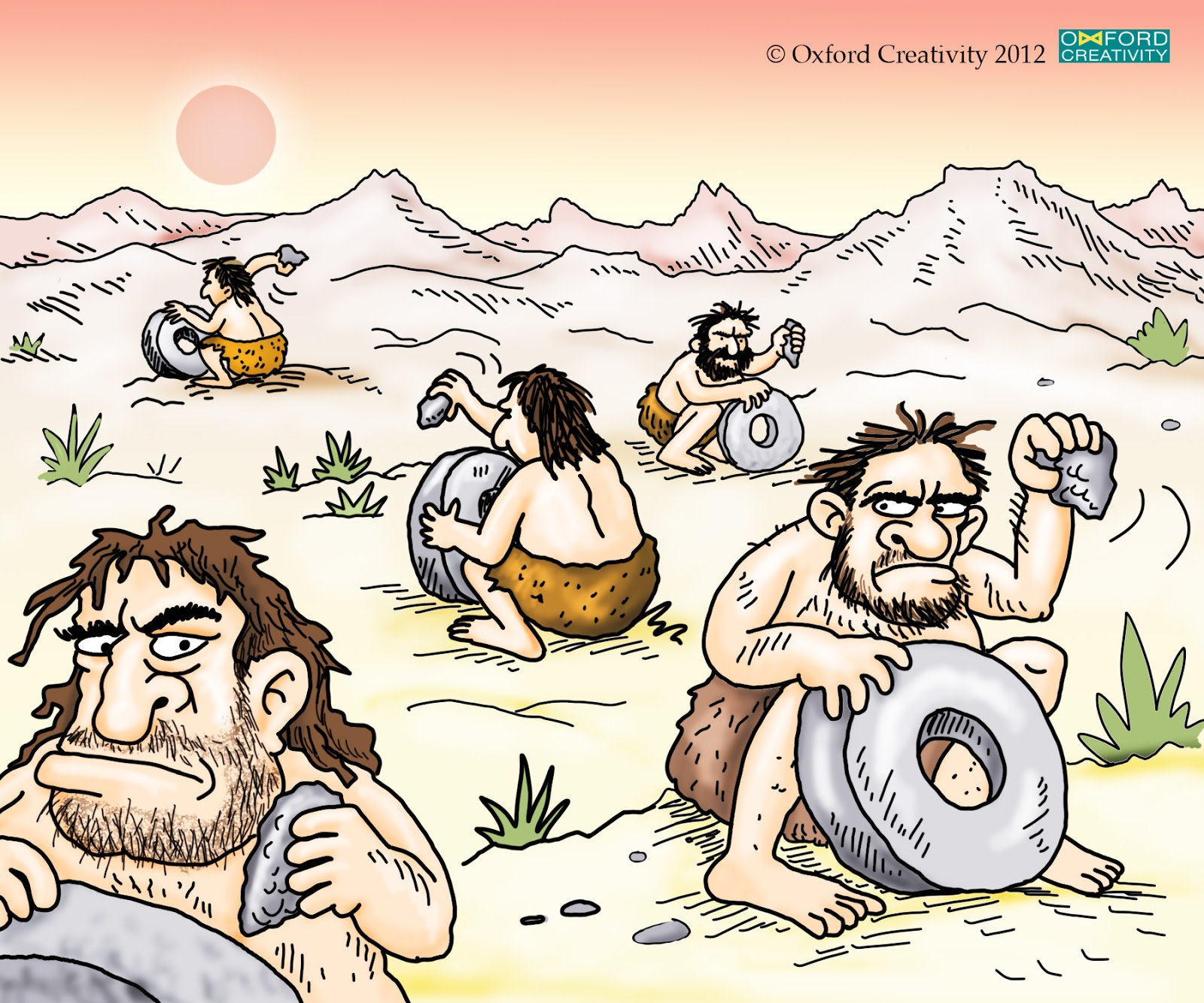
Randy Alcorn has recently repeated a common idea among many evangelicals that one should not read what others write about the bible but rather read it themselves.  We Anglicans agree- up to a point. The point is this- if one shouldn't read what Wesley and Calvin have to say, then why should one read what Randy Alcorn has to say?   This is what is known as a logical fallacy and it is called a self refuting argument.

Certainly one should read the Scriptures, they are the foundation of our faith and western civilization.  However we believe we should not be our own highest authority because the Scripture itself forbids it. A major theme of the Bible is transmission from one generation to the next without addition and subtraction.

If we are not to read others but rely solely on ourselves to read the bible at what point do we become another Wesley to those that follow us? The idea seems to rule out Sunday school as well as commentaries and study bibles. Bad news for Christianbook.com!  Are we to believe that because we are in flesh we are superior to those whose shoulders we stand on in understanding?    Isn't that called pride?

Imagine if we applied Mr. Alcorn's philosophy to other vocations or disciplines such as medicine: "We shouldn't read the findings of other doctors, we should search the body for our own answers". Ouch.  Or how about that $600.00 iPhone in your pocket when falling in the creek (yep, I did that) while fishing?  How about an airline pilot or a SCOTUS jurist?   Isn't that exactly how the Court redefined marriage- they went it on their own disregarding precedent?  Should each successive generation ignore the opinion, training, and collective wisdom of their chosen disciplines and reinvent the wheel? What about maps or education? Surely if God's word states this principle than it should apply to everything in Creation


This shall be written for the generation to come: and the people which shall be created shall praise the LORD. Ps. 102:18


We should read Origen, Chrysostom, Calvin and Wesley -- writers from every age of Christ's holy Bride- they have searched the scriptures and consulted others. We should do this because Christ himself tells us he has brought his Body into "all remembrance" (John 14) and because the Bible also tells us to test all things which includes ourselves!  Why ought we not consult those whom the Holy Spirit has endowed with understanding? Where does the Bible say we must ignore the past generation charged with teaching us and reinvent the wheel?

Reading the testimony of others acts as a benchmark: most of us do not read the original languages or grasp every nuance or cultural framing so consulting other Christians to avoid misunderstanding or missing something seems wise.  Wisdom is given through the gifts of the Holy Spirit and it is given to some more than to others.   Not everyone is endowed with the same gifts and understanding doctrine is certainly a gift. "Who will teach me"?   (Psa 25:4; Acts 8:31; etc.) Honor those that teach. "Let the elders that rule well be counted worthy of double honour, especially they who labour in the word and doctrine." 1 Timothy 5:17

Rather than "Hand in Hand" as Mr. Alcorn's book is entitled, we would suggest "Hand to Hand" as scripture is a deposit of revelation and transmission is more than the sum of individual reading.

Have you heard the objection "you can't trust the Bible because it has been copied so many time"?  The answer to that question is the same as to Mr. Alcorn's idea:

Yes the NT has been copied over and over, but there are 29,000 extant manuscripts. Picking any text, compare all the copies, and individual mistakes become very obvious. In the same manner, reading the sermons and writings of the early church through to Wesley shows what is received and what is innovative and of individual opinion. Such stick out like a sore thumb and doctrine unknown to the majority should be suspect as outside of received teaching.

 Did God forget something and need give a new revelation after the Cross and after his deposit of revelation to the Apostles? Of course not and God doesn't tell Paul of Tarsus one thing and, for instance, John Darby another thing 18 centuries later. Neither add nor take away.


Luke records Paul given inspiration from God.
We are assured that by Jesus promise to send the Holy Spirit to 'guide us' and 'bring us into all remembrance' we can trust our forebears.  To consider those that came before us are unable to teach and to transmit what they have been given is to rob them of their solemn duty and imply the Holy Ghost and Jesus cannot keep the promises of John 14 and therefore cannot be divine.   If we omit the collective wisdom of the Body of Christ we operate under a double standard claiming the Spirit for ourselves but rejecting it in others.

Consider the biblical saying "fruit of the vine' -- is confusion the fruit of God?  Heaven forbid! But confusion is what individual interpretation brings and the division of the Body into tens of thousands of denominations demonstrates that pride and individual interpretation are the result of rejecting wisdom and sound learning simply because it is written by another.  Our collective testimony to unbelievers is compromised by individual interpretation because it objectively substitutes confusion and contradiction for the logical and objective truth of what Scripture teaches.

We believe we have a better way of discerning truth- an objective way to learn and test doctrine.  We will present that next week.  Until then -

The LORD bless thee, and keep thee: The LORD make his face shine upon thee, and be gracious unto thee: The LORD lift up his countenance upon thee, and give thee peace.

John Dixon
Warden
St. Athanasius Anglican Church

Monday, June 1, 2015

Understanding the Holy Trinity


The word Trinity is not in the Bible. But we use lots of words that are not in the Bible to explain the truths the Bible reveals to us. The words “transcendent” and “Incarnation” are not in the Bible either, but both describe biblical truths about God. The Bible is the record of how God has revealed himself to man. Theological statements such as “God is Trinity” are the result of the church’s inspired reflection on that revelation.

In part, the Creed of St Athanasius states: “that we worship One God in Trinity, and Trinity in Unity; Neither confounding the Persons: nor dividing the Substance. For there is One Person of the Father, another of the Son; and another of the Holy Ghost. But the Godhead of the Father, and of the Son, and of the Holy Ghost is all One: the Glory equal, the Majesty co-eternal”.

The Trinity must first be known as an experience before it can be understood as a doctrine.

This is precisely what Jesus tells us in the gospel (John 3:1-15). “Verily, verily I say unto thee, Except a man be born again, he cannot see the kingdom of God.” The word “see” in this verse does no mean merely to look at. It means to know, to understand. Without the gift of the Spirit, by which we are born again, we cannot know God or understand the nature of his kingdom.

The same point is made in Revelation 4. St. John saw an open door in heaven and a voice invited him to “Come up hither.” “Immediately” he was “in the Spirit” in the presence of God. Only through the Spirit was John able to ascend into the presence of God and see heavenly things.

We must first know the Father through the Son in the Spirit before we can understand that God is three persons who are united in one substance of being. We must be worshipers of God before we can be Bible scholars or theologians.


Peace and blessings!
Fr. Thierry 

"For the vision is yet for the appointed time; It hastens toward the goal and it will not fail. Though it tarries, wait for it; For it will certainly come, it will not delay”(Habakkuk 2:3).

Saturday, May 16, 2015

Why We Worship This Way

It seems every time I turn around I see another church advertising for a musician for a praise band. Now, I'm an electric blues musician and I love to play in bands, but it always brings to mind comments I've heard for years from people who say worship should be "relevant," that it should "meet their needs."

Fr. John Matusiak of the Orthodox Church in America has a great response for those statements. He calls such worship "man-centered" worship. Fr. John suggests the focus here is on how God affects "my life" and what "I get out of worship." I believe he's right, because I've heard these comments too many times to discount their relationship to where the person puts the real focus of worship. Here their focus is on "ME”… what "I" want...fitting "MY" expectations…”ME, ME, ME”. The script here is that, "I'm so important that worshipping God has to fit in with the way 'I' want to do it." As with many facets of our society today, the person becomes the most important factor here and God has to take a back seat. This is self-focused, not God-focused.

In the Anglican tradition, we take a view very similar to that expressed by Fr. John in describing Orthodox worship. Anglican worship is not a matter of personal taste. When Archbishop Cranmer was compiling the first Book of Common Prayer in the 16th century, he wasn't really concerned with making the worship relevant for the people of the 16th century. He was concerned that the worship was scriptural and God-centered. Fr. John says that God is the only one we should be concerned with pleasing in our worship and I think he's spot on. "Entertainment" worship might be amusing, but it only lets us experience worship from our own limited, narrow view. It comes from the "ME" and not from God. Let's face it: our view is not always correct. In fact, as Jesus often points out, our views can be quite flawed.

Popular Facebook Meme- What can we say?
Entertainment worship does not necessarily force us to confront our sin, our fallenness, and those things which make us uncomfortable. Instead of centering on God, it substitutes "Top 40" music and a motivational speech....it gives us something that isn't too difficult to swallow.

The fact is that worship is not designed for us, but for God. It is our Lord whom we worship and not ourselves. We should care less about what pleases us and more about what pleases Him. Fr. Matusiak put it well when he says, "...we are called to worship 'in Spirit and Truth,' as we read in Scripture; that we are called to partake of the Body and Blood of Christ 'as often as you come together' lest, as we read in the words of Our Lord Himself in the Gospel of Saint John, we have no life in us; that we are to 'lay aside all earthly cares'....that we are called to transform our fallen human existence and unworthiness by bringing it into the very presence of God Himself--in His Kingdom, not ours--and meeting God 'where He is,' rather than where we are or where we would like Him to be." 

Our worship is God-focused. Just read the Eucharistic rite in the 1928 Book of CommonPrayer. Everything we do is grounded in scripture. Everything we say has a focus on God. When the focus is on us, it speaks to our fallen nature and need for God's love and forgiveness, as well as our need for salvation-- forgiveness and salvation He provides through the sacrifice of His Son. Rather than a weekly shuffling of "off the-cuff" service pieces and parts, our Eucharist is the same every Sunday, completely grounded in scripture and focused on the creator, not His creation. Paul tells us that Christ is the same "...yesterday, today, and tomorrow." The Trinity is unchanging and the key is to understand that our liturgy must reflect that truth.

There are a variety of liturgies today in the church. The Roman Catholics have their rites; the
Orthodox have the Liturgies of St. Basil and St. John Chrysostom; and we traditional American Anglicans have the 1928 Book of CommonPrayer, the Anglican Missal, and the Anglican Service Book. What do these liturgies share? They are God-focused, they reflect the unchanging nature of the Trinity, aligning with the ageless faith of two millennia. They don't move and shift as contemporary tastes change and it's “If you want a religion to make you feel comfortable, I certainly don’t recommend Christianity” ~ C.S.Lewis a good thing because we can see that contemporary tastes aren't always God-centered. Contemporary tastes don't reflect God, but they do reflect selfish humans. Anglicans have witnessed this trend most recently with changes to liturgy that ignore and diminish the nature of the Trinity.

Liturgy is an external event that focuses on internal faith. The Eucharist is an outward and visible sign of an inward and spiritual grace. We learned that in our catechism. It is the experience of Christ's sacrifice and promise of His resurrection and our salvation. Maybe that's where the differences lie.

In some other churches there is no continuity with respect to what is preached when and how. There is no continuity to "liturgy" so it can change a little every week. Some of the current vernacular among the folks who are involved with this type of worship includes calling worship "doing church." They'll say, "there are several ways to do church..." I find that phrase odd. It suggests that worship is something we "do" as though it's a flexible experience that needs to bend to the interests and desires of humans. We traditional Anglicans, don't "do" church. We aren't flexible with our Sunday worship. We follow a liturgical calendar to teach doctrine and glorify God through the scripture and sacraments. Each season of the church calendar is important because it teaches us something about our faith. It's the same every year. If you pray Morning and Evening prayer and attend Mass on Sunday, you will have read the entire Bible in one year and will have gone through a focused "lesson plan" on the Christian faith, a lesson plan that is God-focused.


COME unto me, all ye that travail
and are heavy laden, and I will
refresh you. 
 St. Matt. xi. 28.
Despite what society might think today, enjoyment is not the sole purpose of worship. Knowing and understanding God brings joy, not our personal likes and dislikes about worship. As Fr. John says, "Ultimately, those...who define 'good worship' by their personal tastes or interests are not in a position to fully understand the Liturgy, even though they may 'enjoy' the experience." To understand the liturgy is to move away from yourself and focus on God. Understand what He wants from you and how He wants you to worship Him. To ensure the act of worship reflects the inward and spiritual... and God.

We have the constancy of the Prayer Book which not only guides our worship, but ensures its continuity and orthodoxy. It focuses on what is truly important: God, versus how WE want things and our selfish enjoyment. Linking us to catholic Christians of the ages, it is beautiful, reverential, dignified-- ensuring we are on the right path in our faith. It doesn't let us get distracted by worldly desires and thoughts, but brings us to God and the salvation His Son has given us through His passion and death on the cross. In fact, in the experience of the Holy Communion we might just find ourselves asking whether we're on earth or in heaven and that is the most relevant thing of all.


Adapted from a circular - unknown author. 

Blog (news and archives)

(Check out our new site)